

Mat Pilates at Home for Beginners: Your First Week
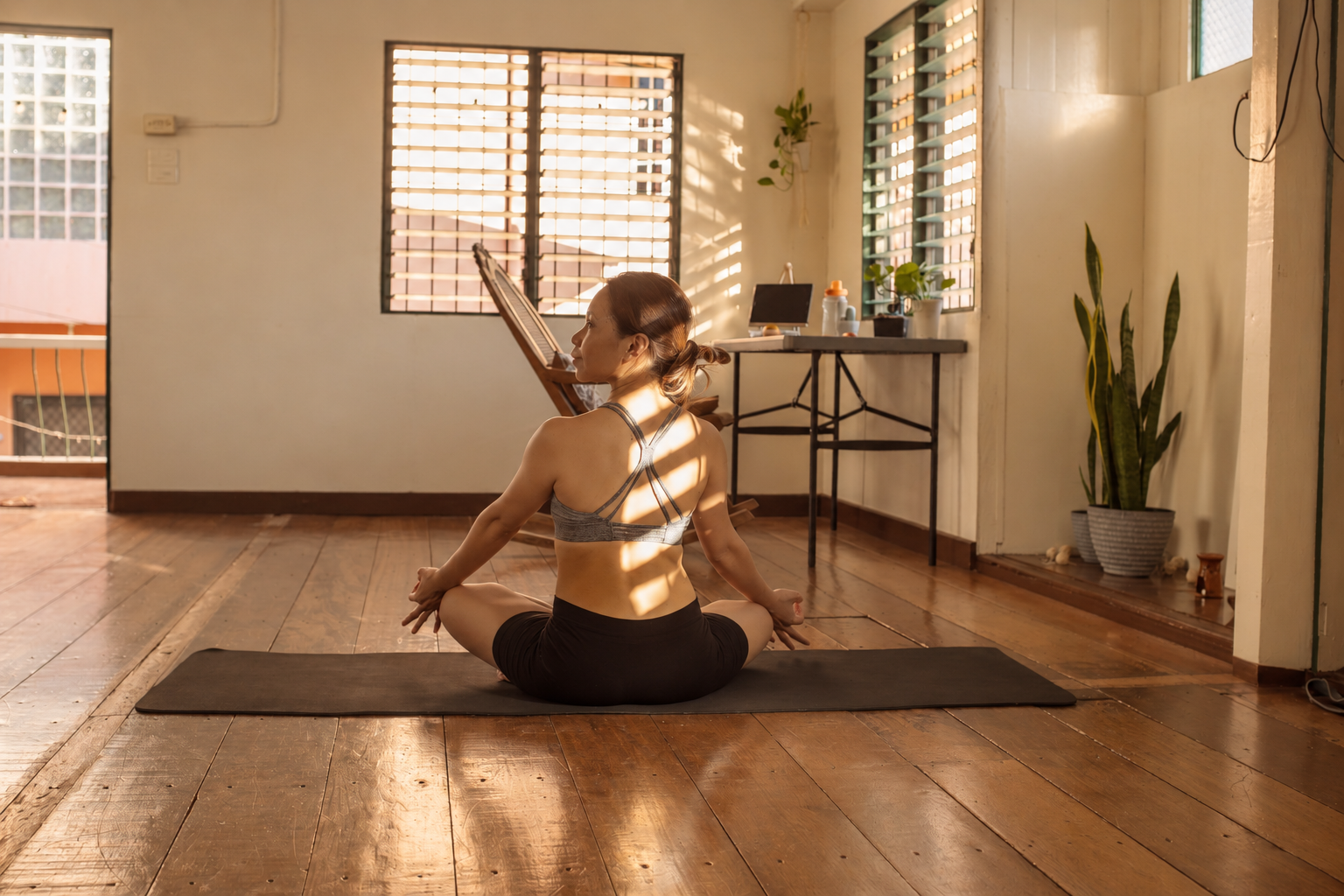
Starting Pilates at home can be simple. You don’t need a studio membership, a Reformer or a cupboard full of equipment. A comfortable mat, some clear floor space and a beginner class are enough to get started.
Your first few sessions are a chance to learn the movements, follow the instructions and find a pace that feels manageable.
Here’s how to begin.
What do you need for Pilates at home?
For a Mat Pilates class without props, you’ll need:
A comfortable mat: choose one that provides cushioning and stays steady on your floor.
Clear floor space: enough room to lie down and extend your arms and legs.
Clothes you can move in: something comfortable that doesn’t restrict your movement.
A screen you can follow easily: a phone, tablet or laptop positioned where you can see the instructor.
Time for a short class: around 15–30 minutes, plus a few minutes to get settled.
Some classes use a resistance band, a small Pilates ball or light hand weights. Others need only a mat.
Check the equipment listed before choosing your class. You can start with sessions without props and explore other options later. Where an instructor offers an alternative without equipment, you can follow that version.
Choose a beginner class first
Even if you already enjoy other forms of exercise, a beginner Pilates class gives you time to learn the approach.
Look for a session that explains the starting positions, introduces movements gradually and gives clear instructions. A short class isn’t necessarily an easy class, so check the level as well as the duration.
You can also watch an unfamiliar movement before trying it. Pause whenever you need more time to understand the setup.
The basics to focus on
You don’t need to master every Pilates principle before your first session. Start by paying attention to a few foundations.
Comfortable breathing
Keep breathing as you move. Your instructor may guide you to notice movement around the sides and back of your ribs or coordinate your breath with an exercise.
Let this become familiar gradually, rather than forcing a deep breath or trying to get every cue perfect.
Support through your centre
Pilates often asks you to use your abdominal muscles to support and control a movement.
Follow the instructor’s cues without gripping as hard as possible or holding your breath. The aim is to find the effort the exercise needs while continuing to breathe.
Your starting position
Notice where your head, ribs, pelvis and limbs are positioned before you begin.
Some exercises use the spine’s natural curves; others involve bending or extending it. Follow the position taught for that particular movement rather than trying to hold one shape throughout the class.
Controlled movement
Give yourself permission to move through a smaller range. Focus on following the movement comfortably and deliberately before trying to make it bigger.
What movements might you see?
Beginner Mat Pilates classes vary, but you may come across:
Pelvic tilts or bridging movements
Simple arm movements coordinated with breathing
Bent-knee leg movements while lying on your back
Side-lying exercises
Gentle seated or all-fours mobility work
You don’t need to learn the names in advance. Follow the demonstration and use the alternatives offered where appropriate.
If a movement causes pain, stop rather than pushing through it. Seek individual guidance if you’re unsure whether an exercise is suitable for you.
Make your routine easy to return to
Choose your next class before your planned session, keep your mat somewhere accessible and allow a little extra time for setup.
If keeping the same time each week helps, put it in your calendar. If your schedule changes often, choose a realistic window each week instead.
Notice practical signs of growing familiarity: understanding a cue, finding a position more easily or needing fewer pauses to follow the class.
There’s no deadline for moving beyond beginner sessions.
What comes after your first week?
Continue with introductory classes until the movements and instructions feel more familiar. You can gradually explore different class lengths and focuses without increasing everything at once.
For help planning your week, read How Often Should You Do Pilates? Building a Routine That Fits.
If you’re choosing between equipment options, explore Mat and Reformer Pilates at Home: What’s the Difference?
Start Pilates at home with Bruna Movement
Bruna Movement’s on-demand Mat Pilates library includes beginner classes taught by Emilie and Sofia, so you can make time for movement at home.
Choose a class that suits your level, check whether it uses props and press play when it works for you.
Mat membership is £15 a month or £120 a year.
Join the waitlist for launch updates.
If you’re pregnant, recovering from injury or managing a medical condition, seek guidance on suitable exercise before starting. Please read our Health & Wellness Disclaimer.
