

20-Minute Pilates at Home: How to Fit Movement Into Your Day
Some days, a long workout fits comfortably into your schedule. Other days, you have a small window between work, errands and everything else.
A 20-minute Pilates class offers a manageable way to make space for movement at home. There’s no journey to a studio, and you can choose a session that suits your experience and the equipment you have.
The starting point is finding a small part of your day that you can realistically make your own.
Is 20 minutes of Pilates worthwhile?
Yes! A short session can contribute to your overall activity and give you time to practise Pilates movements.
What you get from it depends on the class, its intensity, your experience and how regularly you practise. Twenty minutes isn’t a promise of particular results, but it can be a useful part of a broader routine.
Physical activity doesn’t have to happen in long sessions to count. The World Health Organization recognises that all physical activity counts and that some is better than none.
Find a time that works in your actual day
You don’t need to become a morning person to build a home Pilates habit. Choose a time that feels repeatable.
Before work: prepare your space the night before and choose your class in advance.
During a break: allow enough time to change, set up and return to your day without rushing.
After work: try a class before settling into your evening, if that transition suits you.
On a flexible weekend morning: use a quieter window to explore a class without watching the clock.
Planning when and where you’ll exercise is also part of the NHS’s practical advice for becoming more active.
Make getting started simple
A little preparation can make your 20-minute Pilates session easier to begin.
Choose your class beforehand. Check its level, length and equipment.
Clear enough space. You should be able to extend your arms and legs without hitting furniture.
Position your screen thoughtfully. Make the instructions easy to follow.
Keep any props nearby. Avoid searching for a band or ball halfway through.
Allow a little extra time. A 20-minute video may take longer if you pause to understand a movement.
You don’t need a perfectly styled room. A practical space where you can move comfortably is enough.
Choose the class that suits today
Short classes can have different purposes. You might choose a full-body session, a class focused on a particular area or a gentler stretch session.
Start with your experience level, then consider how you feel and what else you’ve done that day. A shorter video isn’t necessarily easier, so check the description rather than choosing by duration alone.
If you’re new to Pilates, a beginner class with clear explanations is a better starting point than a fast-paced session.
Mat or Reformer for a short home session?
Mat Pilates is straightforward to set up. Many classes need only a mat, while others include small props.
Reformer Pilates can also fit into a shorter session if you already have a machine and understand its setup. Give yourself time to make adjustments and follow the equipment guidance.
Both can work within your day. Your available equipment determines which classes you can follow.
Give the whole class your attention
Once you begin, let yourself slow down.
Follow the warm-up, listen to the cues and pause when something is unfamiliar. There’s no need to squeeze extra repetitions into the time or rush the final movements.
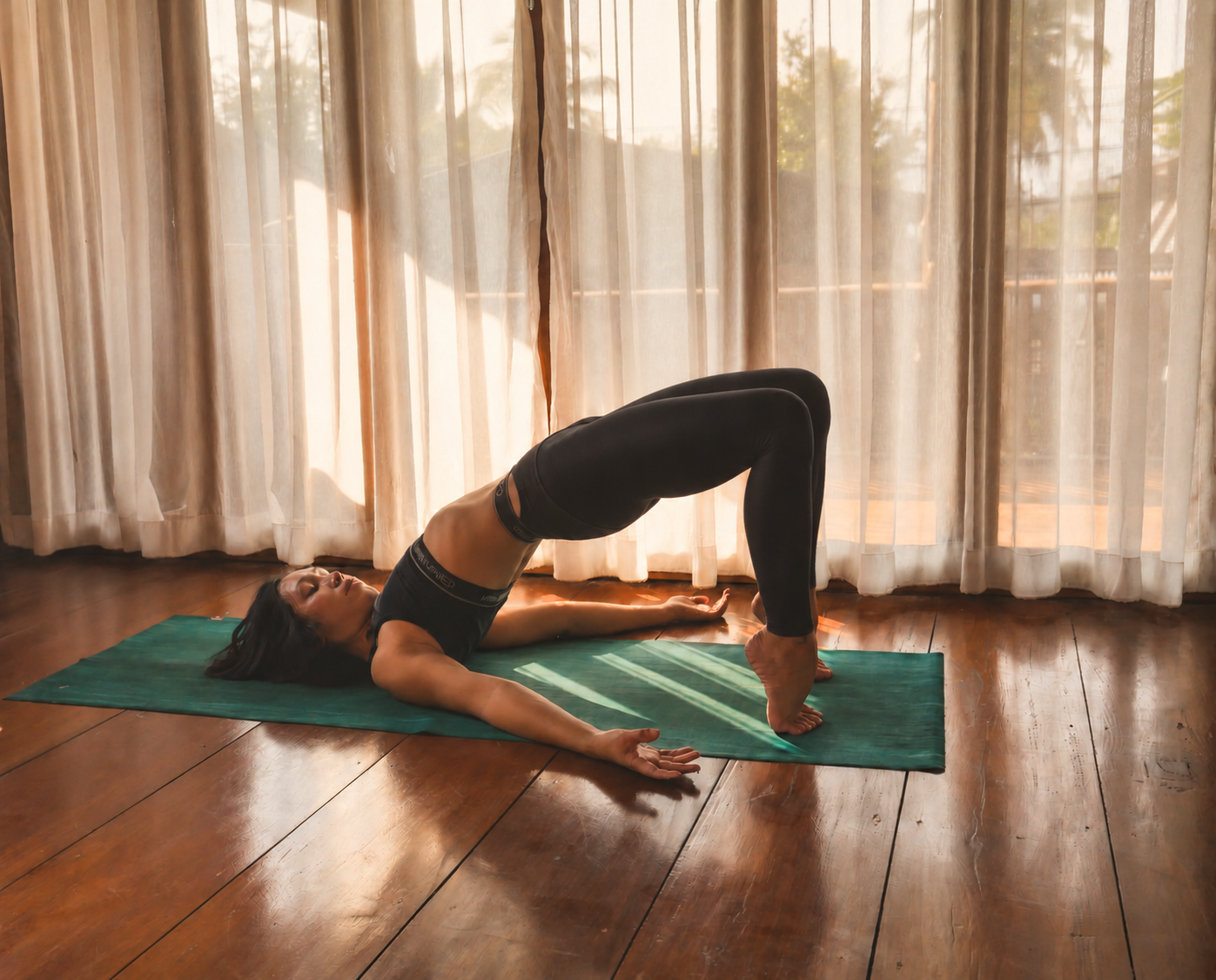
Make room for movement with Bruna Movement
Bruna Movement offers on-demand Mat and Reformer classes, including 20-minute sessions for the days when time is limited.
For more help planning your week, read How Often Should You Do Pilates? Building a Routine That Fits.
Join the waitlist for launch updates.
If you’re pregnant, recovering from injury or managing a medical condition, seek guidance on suitable exercise before starting. Please read our Health & Wellness Disclaimer.
