

Benefits of Pilates: Strength, Mobility and More
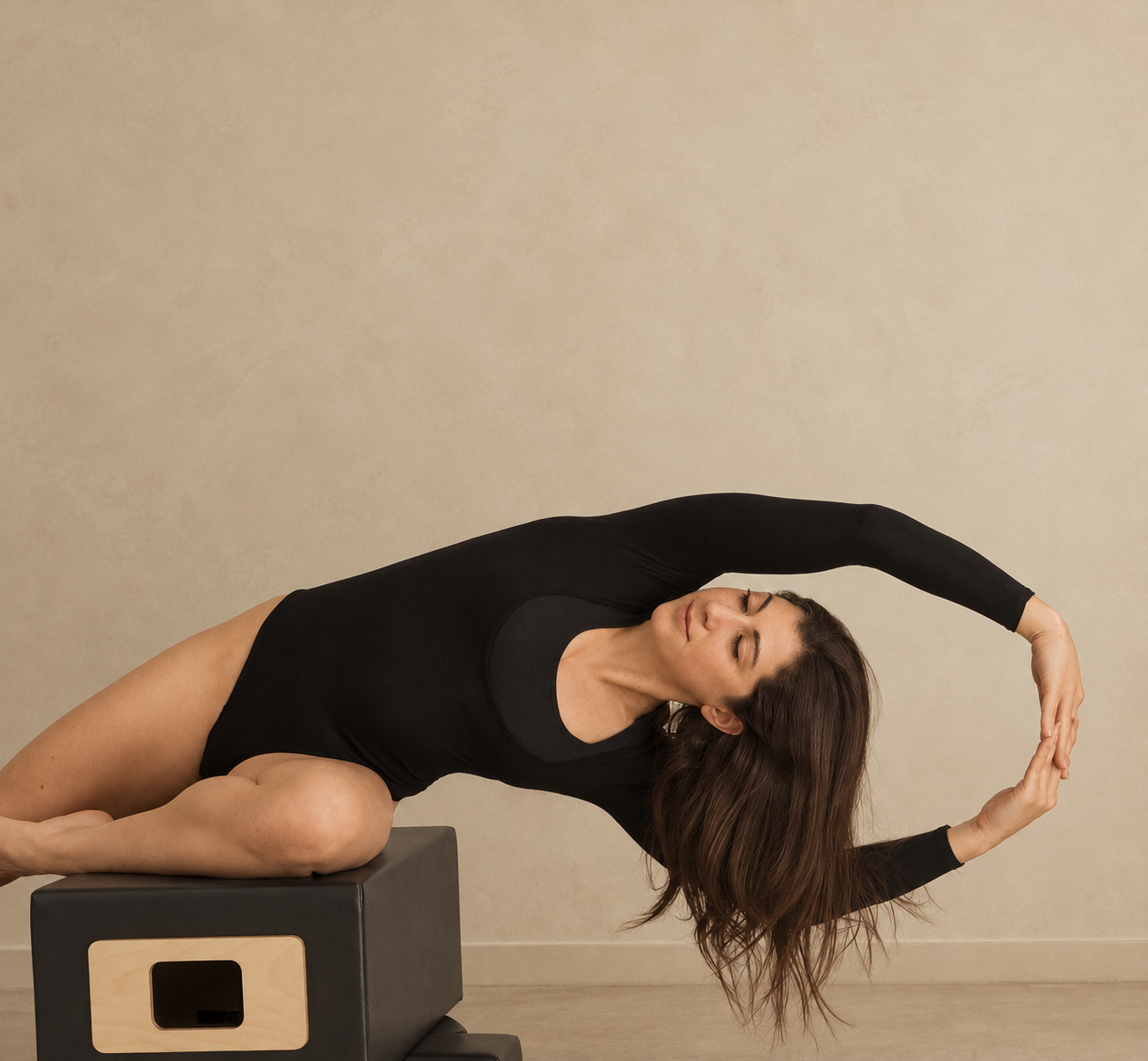
Pilates gives you time to pay attention to how you move. Through controlled exercises, coordinated breathing and a focus on technique, it offers a way to work on strength, flexibility and balance.
You can practise on a mat or use equipment such as a Reformer.
Both approaches offer introductory sessions and more challenging classes, with room to progress as you become more familiar with the movements.
So, what are the benefits of Pilates—and what can you realistically expect from regular practice?
1. Building strength and muscular endurance
Pilates challenges your muscles through body weight, gravity and, in some classes, springs or small props.
Depending on the exercises, you may work your abdominal muscles, back, hips, legs and upper body. Holding a position or repeating a controlled movement can also challenge muscular endurance: your ability to sustain an effort over time.
Pilates is often associated with core strength, but its movements involve much more than your stomach muscles. NHS guidance describes it as an exercise approach focused on strength, flexibility, posture and balance.
2. Improving flexibility and mobility
Pilates classes often combine strengthening movements with opportunities to bend, reach, rotate and stretch.
Flexibility relates to the range available around a joint, while mobility also involves controlling movement through that range. You don’t need to be flexible before starting.
Begin with a range that feels comfortable and follow the instructor’s guidance. Regular Pilates practice can help improve joint mobility, alongside strength and balance.
3. Becoming more aware of your posture
During a class, you might be asked to notice the position of your ribs, pelvis or shoulders, or how your weight is distributed.
That attention can help you become more aware of how you sit, stand and move outside your sessions.
This doesn’t mean holding yourself rigidly or maintaining one “perfect” posture all day. Comfortable movement and the ability to change positions matter too. Posture is dynamic, and there isn’t one position that everyone needs to maintain.
4. Practising balance and coordination
Pilates asks you to coordinate different parts of your body while controlling a movement.
You might move one leg while keeping your pelvis steady, coordinate an arm movement with your breathing or practise an exercise on one side at a time.
These tasks give you opportunities to work on balance, coordination and body awareness. They are skills you can explore gradually, without needing to begin with advanced exercises.
5. Making space to focus
Following a Pilates class involves listening, noticing your breathing and paying attention to the movement in front of you.
For some people, that focused time is an enjoyable break from a busy day. You may appreciate the chance to put your phone aside and concentrate on one thing.
Every session will feel different. You don’t need to finish feeling completely relaxed for the time to have been worthwhile.
6. Finding a convenient way to move at home
One practical benefit of Mat Pilates is its simple setup. Many classes need only a mat and clear floor space.
Some sessions include a resistance band, a small ball or light hand weights, while others use no props. You can choose classes that suit the equipment you have.
If you own a Reformer, online classes offer another way to use it at home. Choose sessions appropriate to your experience and make sure you understand your machine’s setup.
Having options in class length, level and equipment can make it easier to find a session that fits your day.
Do Mat and Reformer Pilates offer similar benefits?
Both can help you work on strength, control, flexibility and coordination. The main difference is how the exercises are performed.
Mat Pilates uses your body weight and gravity, sometimes with small props. Reformer Pilates introduces a moving carriage, springs and straps.
Neither is a requirement for the other, and you don’t need to practise both. Choose according to your equipment, experience and preferences.
Read Mat and Reformer Pilates at Home: What’s the Difference? for a closer comparison.
How long does it take to notice the benefits?
There isn’t a fixed timeline. Your starting point, class choices, consistency and other activities all influence your experience.
Look for changes you can recognise in your practice: following an exercise more confidently, controlling a movement more smoothly or finding a familiar class more manageable.
You don’t need to judge progress only by appearance or soreness.
For help creating a manageable schedule, read How Often Should You Do Pilates? Building a Routine That Fits.
Find your practice with Bruna Movement
Bruna Movement offers on-demand Mat and Reformer Pilates, with classes to suit different levels, lengths and equipment setups.
Choose Mat membership for £15 a month or £120 a year, or Mat + Reformer membership for £20 a month or £180 a year.
Join the waitlist for launch updates.
If you’re pregnant, recovering from injury or managing a medical condition, seek guidance on suitable exercise before starting. Please read our Health & Wellness Disclaimer.
